
Measure P commission finally moves grants process along, but money likely won’t go out until late August
By Doug Hoagland
Before a packed audience that pleaded for the release of the first-ever Measure P grants to arts organizations and artists, the Parks, Recreation and Arts Commission voted on July 15 to do just that.
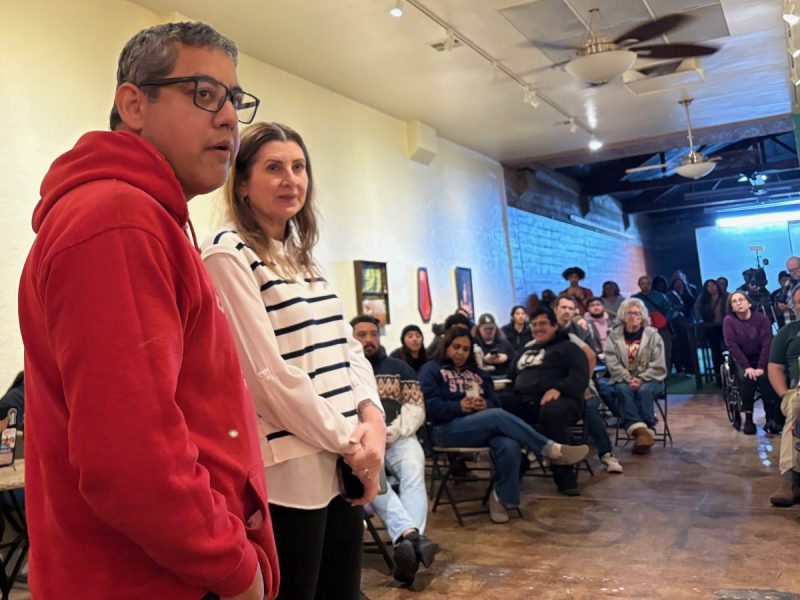
Pictured above: Arts supporters turned out Monday to ask the Measure P commission to break a bureaucratic stalemate and release their already awarded grants. Photo: The Munro Review
The Commission’s action was called a “reconsideration” of recommended grants to more than 70 applicants. It turned out to be a “redo.
That’s because the Commission had voted on May 20 to accept the same funding recommendations that they accepted on July 15.
The audience of arts administrators and supporters burst into applause as the seven Commissioners (two were absent) voted to release $8.6 million to the recommended nonprofits arts organizations and individual artists with eligible fiscal sponsors.
Here’s where the process goes from here, plus some highlights from the July 15 meeting.


Organizations and artists won’t get their Measure P money immediately
Unsuccessful applicants now have 10 days to submit appeals. Until the Commission either accepts or rejects the appeals, the Measure P money cannot be disbursed.
The Commission’s next regularly scheduled meeting is Aug. 19.
A 10-day window for appeals followed the original May 20 vote to accept recommendations. But the new 10-day window is necessary after the reconsideration vote on July 15.
What happened to compromise?
A compromise plan in the name of equity to give additional Measure P grants to six previously-denied applicants is still in the works.
Commissioners Laura Ward and Scott Miller – who make up the Commission’s cultural arts subcommittee – brought to the July 15 meeting a proposal to allocate an additional $189,597 in Measure P funds to six applicants in the emerging category of new or small-budget organizations or artists. The six were left out of funding in the Commission’s May 20 vote and again in the July 15 vote. But Ward said she hopes the Commission will take up the proposal at its Aug. 19 meeting.
Recent Measure P coverage:
EMOTIONS RUN HIGH ON MEASURE P COMMISSION AS CHALLENGES OVER EQUITY STALL GRANT DISTRIBUTIONS
And: DOWNTOWN FRESNO PARTNERSHIP AND LAOTIAN DANCE GROUP PUSH BACK AGAINST FRESNO ARTS COUNCIL OVER MEASURE P GRANTS
And: MEASURE P GRANT RECOMMENDATIONS APPROVED BY FRESNO CITY COMMISSION
And: AS SELECTION PROCESS FOR MEASURE P GRANTS BEGINS, THE MUNRO REVIEW ASKS FOR OPENNESS
And: WITH AN OCEAN OF TAXPAYER MONEY AVAILABLE, MEASURE P ARTS FUNDING IS SURE TO RAISE COMPETITION AND QUESTIONS
And: GROWING PAINS: IS FRESNO CITY COUNCIL MICROMANAGING MEASURE P ARTS FUNDING?
Quote of the night
Bruce Kalkowski, artist, downtown business owner, past president of the Fresno Arts Council board and current Arts Council board member:
“Why does the City of Fresno arts and cultural landscape remain unchanged after the passage of Measure P, which has generated $9.5 million [for 2024 grants]? What’s the hold-up? I’m begging the Commission to get off the dime and approve the first round of grant funding for arts and culture. Don’t let perfection be the enemy of good.”
Quote of the night, Part 2
Edna Garabedian, artistic director of the California Opera Association in Fresno, rose above the cajoling of other speakers to capture the essence of Measure P: a way to foster and expand appreciation and enjoyment of the arts in Fresno. She didn’t plead with the Commissioners. Instead, she invited them to an upcoming California Opera production. “A performance is worth a thousand words,” Garabedian said.
Fresno Arts Council error also led to delay
Many of the 46 people who addressed the Commission blamed the delay in releasing the $8.6 million on questions of equity raised largely by Commissioner Jose Leon Barraza. But they didn’t talk about the procedural error of the Fresno Arts Council that caused the delay in the first place.
Here’s the background: The Commission at its June 17 meeting was scheduled to consider two appeals from applicants who received no funding in the May 20 vote. After that, the Measure P funds could have been set for release. But the Commission didn’t take up the appeals on June 17 at the direction of the City Attorney’s Office. Eventually, it was revealed that the Arts Council – which has a city contract to run the grants program – failed to provide the Commission with all the information on grantees that the city contract requires. That led the Commission to schedule a July 1 special meeting for “reconsideration” of the recommended grants.
At the July 1 meeting, Lilia Gonzáles Chávez, executive director of the Arts Council, told the Commission “we’re here” because “it appears I did leave out a bit of information that you should have received.”
The equity issue – whether southeast, southwest and south central Fresno are getting their fair share of Measure P funding – led the Commission to push the reconsideration to July 15, which is what many speakers on July 15 focused on in their remarks.
The Munro Review has no paywall but is financially supported by readers who believe in its non-profit mission of bringing professional arts journalism to the central San Joaquin Valley. You can help by signing up for a monthly recurring paid membership or make a one-time donation of as little as $3. All memberships and donations are tax-deductible.
 Doug Hoagland / The Munro Review
 Stephen Wilson, executive director and CEO of the Fresno Philharmonic, was one of the audience members at Monday’s meeting to address the city’s Parks, Recreation and Arts Commission.
Commission drama
Ward gave an opening statement in which she said the cultural arts subcommittee had been “kept in the dark” by the Commission, that the funding process was sliding into “bureaucratic quicksand” and that some of the other Commissioners were not considering “the very human negative impact” caused by the delay in funding.
Commission Chair Kimberly McCoy did not respond directly to Ward’s pointed comments. Instead, McCoy said: “It was just that we didn’t receive the proper information in enough time for us to review it. We also added a new commissioner to our Commission so [we wanted] to allow enough time for the new Commissioner to review the information as well, and now that we all have the information and we have reviewed it, now we’re ready to proceed on.” The new commissioner is Rose Caglia, who joined the Commission at the July 1 meeting. She told The Munro Review: “I believe I made a reference to needing time to digest” the information.
Commission drama, Part 2
Barraza said it was “beautiful” that some people in the audience indicated a willingness in future rounds of Measure P funding to help organizations and artists in south Fresno who lack experience in applying for grants. He also said it was his responsibility to consider the needs of the entire city, but “I cannot ignore certain areas where we have less sophisticated people that are not able to put applications together and don’t have the resources to do that.”
Barraza praised the Arts Council for its willingness to target areas in south Fresno so they are better positioned to apply for Measure P funds in the future. “We have all the ingredients to make this a win-win relationship,” Barraza said.
Commissioner Christina Soto agreed it was important to have the kind of information that Barraza requested so issues of outreach and accessibility can be addressed in future rounds of Measure P funding. But Soto – who said at a previous meeting that she lives in southwest Fresno – took issue with Barraza’s term “less sophisticated.”
“I kind of take offense to that. To be honest, I think we have a lot of sophistication. What we don’t have is outlets and platforms and accessibility. So I think those are the things we wanted to have a clear picture of before moving forward.”
Links to Measure P grant recommendations
• General Operating Support for Established Organizations
• Project Specific Support for Established Organizations
• General Operating Support for Emerging Organizations
• Project Specific Support for Emerging Organizations
• Fresno Arts Council May 20 draft presentation to Parks, Recreation and Arts Commission