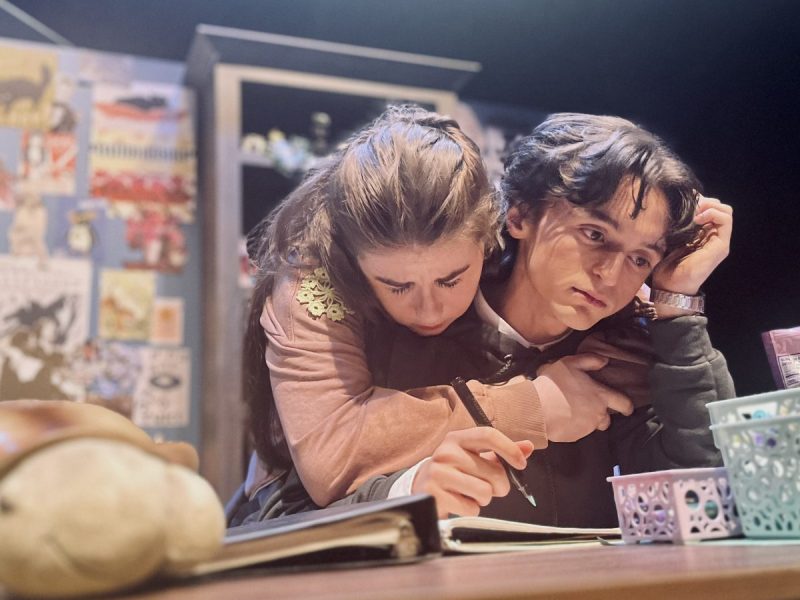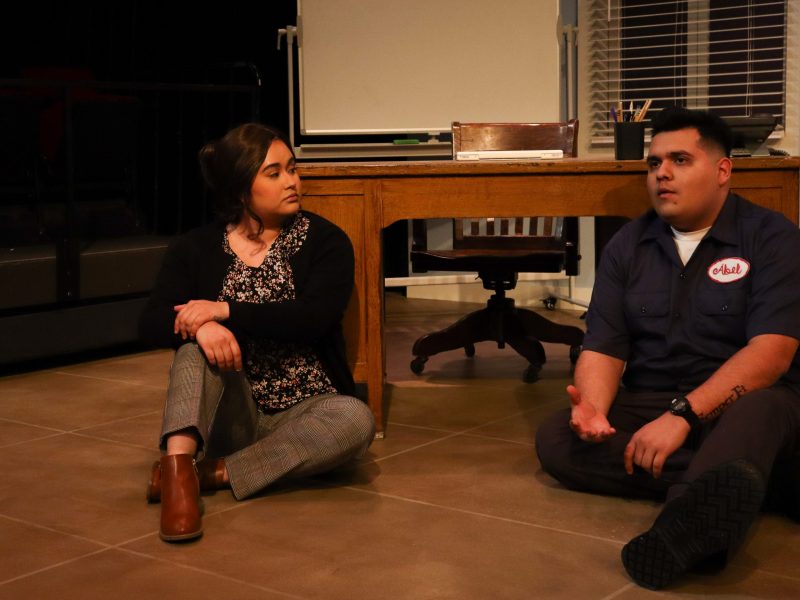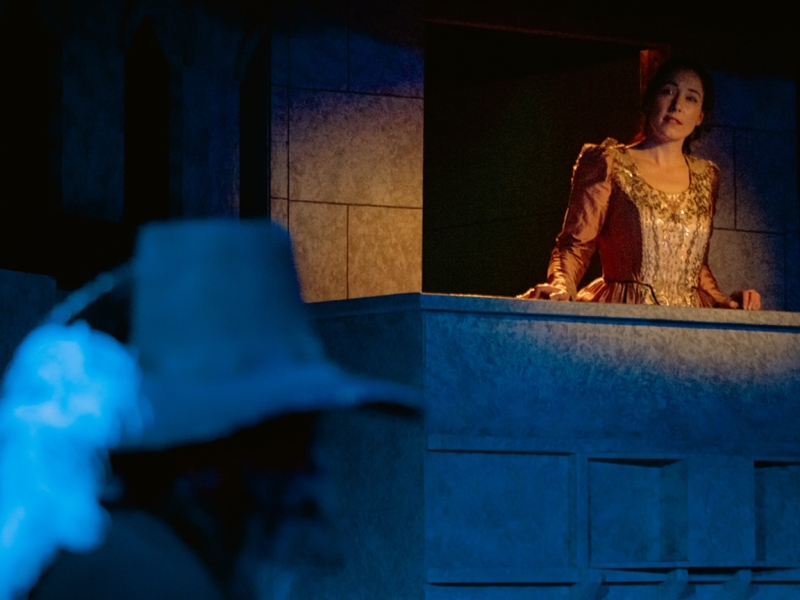




With ‘Chicken and Biscuits,’ a family gathers for a funeral. Hilarity and drama ensue.
By Donald Munro
In the new Fresno State production of “Chicken and Biscuits,” a tried-and-true narrative trope occurs:
Somebody dies.
In the case of this newish Broadway romp, which opens Friday, Nov. 1, and continues through Nov. 9, a funeral ensues, as is often the case. This means a bunch of family members gathering together, some of whom haven’t seen each other in a long time, and all bringing the type of family baggage that can turn comic, caustic and even heartwarming.
I did a quick check-in with Thomas-Whit Ellis, the Fresno State professor directing the play, to find out more about the production.
Q: The idea of family members coming together for a funeral has been explored many times before in theater and film. Are there lots of examples in Black theater?
A: So the “funeral” is one of the last remaining ritualistic forms in Black culture today. Many traditions have been added over the years to keep its spiritual and social significance in tact. All of this revolves around how Blacks deal with death in our society. Unlike Jewish or Islamic faiths, Blacks have kind of invented their own style of honoring the dead which was ultimately taken from white Christian traditions.

There are many references to funerals in African American dramatic literature, but very few include the actual even per se. Because of such few plays on the subject despite its significance with Black culture, “Chicken and Biscuits” caught my attention.]
Q: The Rev. Bernard isn’t in the play, because he’s dead, but he’s still a major character. What kind of guy was he?
A: He represents the traditional senior pastor of large Black churches, old, wise and highly revered. Many of these old-school preachers are gone now but represented that spiritual base that Black culture looked (s) up to. Essentially the community patriarch that could do no wrong. If you were to interview local African Americans they will nostalgically reflect on several of these kinds of preachers who presided over churches years ago.
Here, this family discovers a seemingly horrible and iconoclastic skeleton in the pastor’s closet, which is the basis for the plot.
Q: An interracial relationship is part of the storyline. Twenty years ago, that probably would have been a big deal. Do you (or, more importantly, your students) think it is today?
This acceptance/resistance factor, in my opinion, seems more rooted in intergenerational norms and expectations. Younger people seem far more accepting of these relationships, especially since many of them are from “mixed race” unions. The number of interracial dating relationships and marriages has exploded over the past few decades, and society seems to be moving more toward it being less of a big deal than years prior.
Q: Comic timing is hugely important in a play like this. How do you “teach” it?
Oddly, many students see this via TV and film sitcoms or romantic comedies. They understand it but in many cases have trouble putting it to practice on stage. Mainly because live audience is a very fluid entity. Every audience is slightly different with different reactions. This is especially the case with Black comedies, whose audiences tend to be more interactive with the actors.
The Munro Review has no paywall but is financially supported by readers who believe in its non-profit mission of bringing professional arts journalism to the central San Joaquin Valley. You can help by signing up for a monthly recurring paid membership or make a one-time donation of as little as $3. All memberships and donations are tax-deductible. The Munro Review is funded in part by the City of Fresno Measure P Expanded Access to Arts and Culture Fund administered by the Fresno Arts Council.
Because of this I continuously prepare actors to expect difference in reactions according to the makeup of the audience. Blacks will see humor in what they can relate to. Which is to be expected. White audiences may not see these nuances and be reluctant to find humor in certain situations.
So I present timing in a few different ways, which remain flexible according to our viewership for any given performance.