



Theater review: ‘The One-Act Play That Goes Wrong’ delivers nonstop chaos at Selma Arts Center
By Manjot Dhanda
From the moment the performance begins, “The One-Act Play That Goes Wrong” makes it clear that nothing will go according to plan. What starts as a 1920s-style murder mystery inside the play “The Murder at Haversham Manor,” centered on the suspicious death of Charles Haversham, quickly turns into a chain reaction of missed cues, broken props and collapsing set pieces, where everything looks like it’s falling apart, but isn’t.
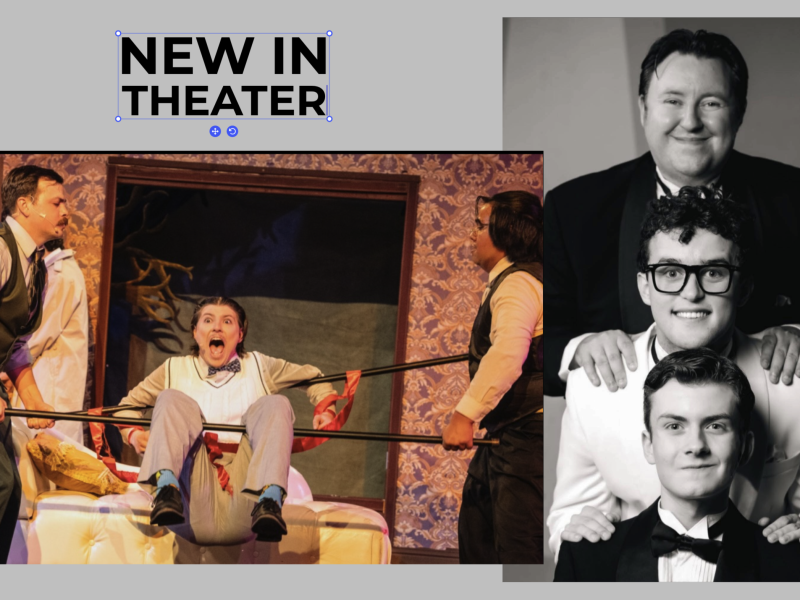
Presented at the Selma Arts Center and directed by Levi Hills, the show follows a fictional theater troupe attempting to perform a classic whodunit. That plan falls apart almost immediately as nearly every aspect of the production begins to fail. Doors fail to open, props go missing at critical moments and parts of the set begin to collapse, forcing actors to adapt in real time. The constant tension between control and chaos is what makes it so enjoyable to watch.
At the Sunday, March 29, matinee, which featured the Downside Up cast, the energy never really dropped and only got more chaotic as the show went on. Instead of just a few big jokes, the production builds its humor gradually, with each mistake escalating into something more chaotic than the last. There’s a momentum to the comedy that makes it hard to look away, even for a second.
What stands out most is just how well the cast is able to stay fully committed, even as everything around them falls apart. Gavin Flores, who plays Chris, stands out for his sharp timing and ability to stay grounded even as the chaos escalates around him. Everardo Guajardo, as Dennis, also delivers a strong performance, leaning into the physical comedy and helping drive some of the show’s most frantic moments. Liliana Herrington, as Annie, adds to the dynamic with quick reactions and an ability to adapt seamlessly within the unfolding chaos.
Flores maintains a steady presence throughout the performance, often anchoring scenes as the chaos builds around him. His controlled delivery makes the surrounding chaos even more effective.
Guajardo brings strong physical energy to his role, fully committing to the escalating mishaps. His performance helps push several of the show’s biggest comedic moments.

Herrington brings a sharp awareness to her role, reacting quickly to the shifting pace of each scene. Her timing helps keep the momentum of the performance consistent as the chaos unfolds.
That dual-layered performance is what really makes the show work. Performers are not only portraying their scripted characters, but also actors within the story who are struggling to keep the production together. Watching them keep track of both layers, while navigating physical comedy and constant disruptions, is part of what makes the performance so engaging. It’s especially impressive how effortless they make something so technically demanding look. At times, certain moments of dialogue feel slightly rushed, but the overall timing and commitment from the cast keep the performance cohesive.
One of the best parts of the show is how it blurs the line between what is scripted and what feels spontaneous. At times, it becomes difficult to tell whether a mistake is intentional or not. That uncertainty adds to the humor, as the audience is left guessing while the chaos continues to build. That unpredictability is a big part of what makes the show so charming.
The audience’s reaction reflects just how well the comedy lands. Laughter builds steadily throughout the performance, often extending through entire sequences rather than single jokes. The humor works especially well due to a mix of sharp timing and larger physical moments, keeping the energy high from start to finish. It’s the kind of show where the audience feels just as involved in the experience as the performers.
The Munro Review has no paywall but is financially supported by readers who believe in its non-profit mission of bringing professional arts journalism to the central San Joaquin Valley. You can help by signing up for a monthly recurring paid membership or make a one-time donation of as little as $3. All memberships and donations are tax-deductible.
The performance space also plays an important role in shaping the experience. The Selma Arts Center provides an intimate environment that allows for interaction between the actors and the audience. Certain moments move beyond the stage and into the theater, making the audience feel more involved. That closeness adds to how immersive and fun the whole performance feels.
The set design, by Nicolette and Erik Andersen, plays a major role in the comedy, with pieces of the manor breaking, shifting or collapsing at key moments. These technical elements are carefully timed and act as part of the performance itself, rather than just background. Costuming, hair and makeup design, by Levi Hills, and lighting design, by Glenda Stewart, remain relatively traditional, helping ground the show in its murder mystery setting while contrasting the increasing chaos on stage.
As the play progresses, the chaos continues to escalate, but it never feels uncontrolled. Each scene builds on the last, creating a sense of escalation that keeps the audience invested. By the final moments, the production fully embraces its premise, and the ending matches just how chaotic everything has become.
Even though everything looks like it’s going wrong, it never actually does. You can tell there’s control behind it, and that’s what makes it work. The precision behind each mistake makes it clear that the chaos is carefully constructed. By the end, it’s clear the chaos was the point all along.