



Q&A: Three friends and 30 years of history create natural laughs in ‘The Cemetery Club’
By Heather Parish
There’s something especially fitting about casting three lifelong friends as the three lifelong friends at the center of “The Cemetery Club.” In Good Company Players’ (GCP) latest production, opening this Friday, Aug. 28, for an eight-week run, director Kristin Lyn Crase brings together GCP veterans (in center image above, l-r) Karan Johnson, Valerie Muñoz and Elizabeth “Biz” Fiester), who have known one another for more than 30 years, acting together on GCP stages the whole time. That kind of backstory and shorthand can’t be manufactured in rehearsal, and it raises an intriguing question:
What happens when you put three genuinely lifelong friends into roles built around a lifelong friendship?
I caught up with Crase (a lifelong friend of my own) via email about directing this unusual cast, the special sauce it brings to an overly familiar script, and what audiences can expect when they join the club.
***
What should audiences expect from this particular “Cemetery Club” that they might not expect from the title, or even from a production they’ve seen before? What’s special about this one?
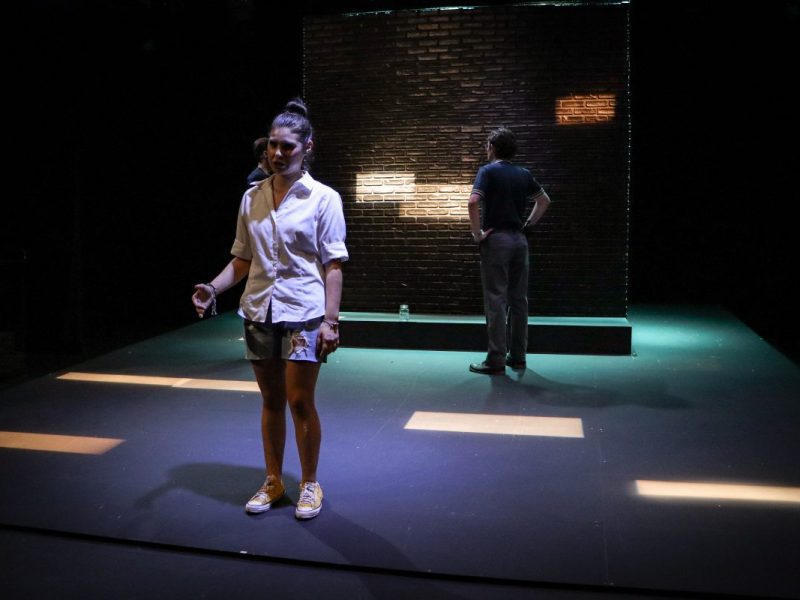
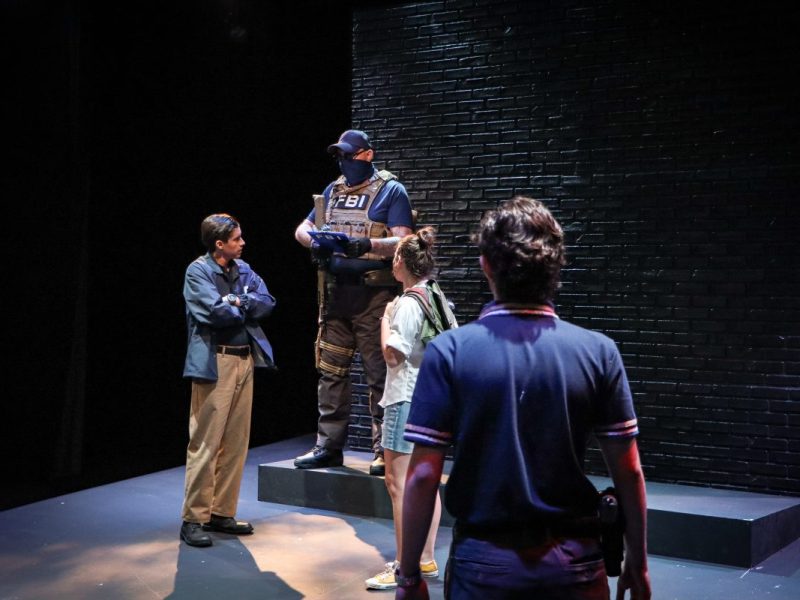
Crase: It’s been my intention for this story to bring the characters and the story to the forefront. Making that happen means that the set is much more sparse than the elaborate (and when done by David and the scene shop crew, absolutely gorgeous) sets that most people might be accustomed to. I like to ask the actors, and therefore the audience, to create some things in their own minds. This includes the gravestones, which are ever present in the minds of our characters but not physically on the stage. My hope is that the audience is so enamored of the story that the physical objects fall away and they just come along with us for the very human interactions happening between the 6 people on stage.
STORY CONTINUES AFTER SPONSORED CONTENT


The three women at the center of “The Cemetery Club” have a decades-long friendship, as do Biz, Karan, and Valerie who are playing the roles. What happens when the history between the actors is almost as long as the history between the characters?
Crase: What happens is the immediate physical and emotional comfort of having an old friend nearby. They already knew how to highlight each other’s strengths and how to help out with each other’s weaknesses.
Did the fact that these three actors have been close friends for more than 30 years influence your decision to cast them together, or did you discover their chemistry during the casting process?
Crase: It didn’t directly influence my choice, but I’m sure it helped when they read together. I had so many excellent choices at the audition, but when I read the three of them together, it just felt so correct.
The play depends on the audience believing that these women know one another almost too well. They know each other’s habits, triggers, and secrets, right? What do these particular actors bring to that dynamic that you couldn’t manufacture in rehearsal?
Crase: I like to work in a very collaborative way. Anyone in the rehearsal can throw an idea out, and we’ll try it to see if it works. Once they started throwing out ideas and giving things a try, it became immediately apparent which things were landing because they started making each other laugh. Many of the laughs that we got in the rehearsal room naturally made it to the stage because the characters as friends would also naturally make each other laugh. They don’t need to force those laughs.
On the flip side, can that much real-life familiarity ever make your job as a director harder?
Crase: You would definitely think that 3 friends with such a lifelong friendship could terrorize a director (LOL!) but it was genuinely the opposite. These three ladies, along with Noel Adams (Sam) and Terri Jerels (Mildred), have been an absolute joy to work with.
At its heart, “The Cemetery Club” is about friendship changing as life changes. These characters confront grief, new relationships and the possibility of moving into a different chapter of their lives. How does this production highlight those themes?
Crase: The themes of grief, love, and friendship are really highlighted by the laughter in the production. It’s very human for us to have a laugh in the midst of grief, to remember a funny story about the deceased, or for a friend to say something absurd that makes us laugh while we cry. It has been a joy to watch these five actors create real, human, funny characters that make each other laugh as they all navigate this new chapter.
While the title sounds rather grim, the play is a comedy about women who are very much alive and determined to keep living. How are you balancing the humor with the grief and vulnerability underneath it?
Crase: I feel like the vulnerability and grief live in the moments when we embrace silence. When we take a moment to look at each other with understanding. There have been a few moments in rehearsal where I have said, “Hey, take a bit of time with that, give it a beat, take a breath, it doesn’t need to rush.” The comedy tends to be quick and snappy, so the tense moments, the moments of heartbreak, can take their time.
If you had to describe the chemistry among these three actors without using the word “chemistry,” what would you call it? And when did you first see it click during rehearsal?
Crase: There is chemistry with the whole cast, but I think that the actual words I would want to use are “ease” and “familiarity.” When you’ve worked with people, especially in a creative and vulnerable task like theater (and by extension storytelling), you start to know their strengths and their weaknesses. Right around the start of our second week of rehearsal, I asked the ladies to collectively react to a moment in the script, and the entire rehearsal devolved into giggles. I knew at that moment that we were on the right track. I’m so excited for audiences to discover those moments with us.
After spending so much time with these characters—and watching these particular three friends inhabit them—what do you hope audiences take away when they leave the theater?
Crase: I really hope that audiences walk away feeling like they know these folks personally. I hope that the story’s very human moments draw them in and make them consider their own friendships, relationships, and losses. Not to get too woo-woo about the whole thing, but I hope that we collectively sit in the theater and have a moment of shared hope that the grief we feel at the loss of a loved one is best when shared with the people that know and love us.
“The Cemetery Club” runs at the 2nd Space Theatre from August 28 – October 18.
Banner images courtesy of Karan Johnson, Valerie Muñoz, and Elizabeth Fiester.

Pingback: Critic’s Notebook: "Cemetery Club" a play for lifelong friends | THE MUNRO REVIEW