



TMR asks city for names of the 103 applicants to score Measure P grants. So far, we haven’t gotten them.
By Doug Hoagland
It might be the biggest decision about Measure P in 2026, and it could determine who wins – and who loses – in the next round of taxpayer funding for the arts in Fresno.
That decision involves choosing the 35 people who will score 175 grant applications from arts organizations and artists seeking a share of nearly $6.5 million in new Measure P funding. The scores will help shape the city’s artistic and cultural landscape in the next year.
In full transparency, The Munro Review has a grant application among the 175 and is seeking $67,000. The arts/culture website also applied in both of the last two years, receiving $26,200 in 2024 and nothing in 2025.
Keep track of Measure P: Reporter Doug Hoagland won a 2026 Gruner Award (the highest honor in Valley journalism) for best news story for staying on top of Measure P. See past coverage in The Munro Review’s comprehensive archive
The Parks, Recreation and Arts Commission will select the 35 from a pool of 103 people who applied and are eligible to serve on the so-called Application Review Committee. A total of 111 applied, but eight were screened out for possible conflicts of interest.
The final selection of the 35 could come later this month, according to Shelby MacNab, assistant parks director. She originally envisioned 30 people on the Application Review Committee, but that number was increased to 35 because of the volume of grant applications.
STORY CONTINUES AFTER SPONSORED CONTENT


At the Oct. 26 meeting of the Parks, Recreation and Arts Commission, MacNab vowed transparency in the selection process. But it remains unclear whether – or how soon – the City might make public the names of the 111 people. One 2026 applicant, Andreas Werz of the Philip Lorenz International Keyboard Concerts, said knowing the 111 names – and their artistic backgrounds – is important. It would allow all grant applicants to better assess the expertise of the 35 who are eventually selected, he said.
Who are they?
Acting on MacNab’s pledge of transparency, The Munro Review is seeking the 111 names in two ways. First, it filed a Public Records Act request with the City Attorney’s Office on Oct. 26. It can take weeks or months to receive requested documents.
Second, The Munro Review emailed City officials on Oct. 29 asking them to release the names without the need for the Public Records Act request. Neither City Manager Georgeanne White nor City spokesperson Sontaya Rose Schmidt responded immediately to that request.
For context, in 2025 the Fresno Arts Council released to The Munro Review – without the website having to file a Public Records Act request – the names of all 48 people who applied to score grant applications. Thirty-eight of them were selected. The Arts Council ran the grant program in 2024 and 2025, but the City took over this year upon discovering that the former operations manager at the Arts Council had embezzled $1.8 million.
Bias a factor?
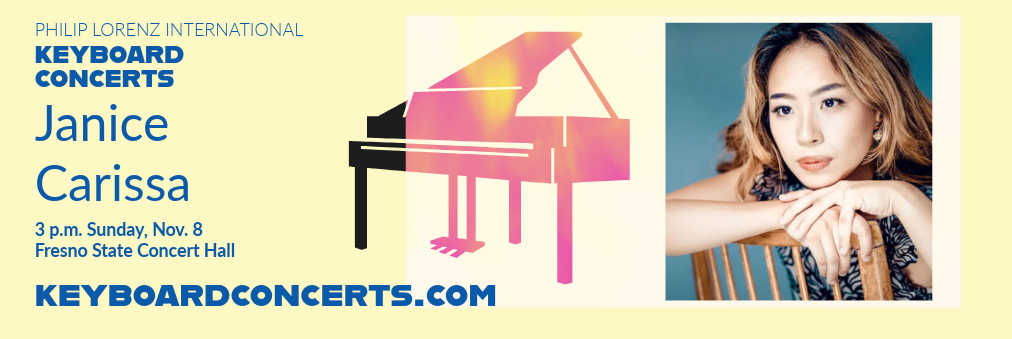
In 2025, the impact of who is selected to score grant applications – plus their artistic backgrounds and possible artistic biases – came into focus with a controversy involving a failed grant application. The nationally acclaimed Philip Lorenz International Keyboard Concerts applied for $100,000 to pay the fees of pianists who perform concerts of classical music at Fresno State. Keyboard got nothing.
It wasn’t the only 2025 grant applicant that received no money; 60 others out of 195 were shut out. But comments from some of the five evaluators who scored Keyboard’s application indicated, at best, a misunderstanding about Keyboard’s contribution to the community, and at worst, a bias against its focus on classical music.
One evaluator, in written comments, referred to a statement in Keyboard’s grant application as “elitist condescension.” In an interview with The Munro Review, a second evaluator said there seemed an immediate negative reaction when the evaluators met to discuss Keyboard’s 2025 application. A third evaluator said Keyboard’s application ignored important issues like outreach to students in Fresno – an alleged failure that hurt Keyboard’s chances of getting Measure P money.
Keyboard is trying again in 2026 for a Measure P grant, applying to receive $80,000 in operating support. Werz, president and artistic director of Keyboard, wants to know whether anyone who will evaluate Keyboard’s grant application has a background in classical music.
“It seems like it’s a no brainer,” he said. “If you want to evaluate the quality of our work, and put it in perspective to what is happening in the music world in general, you have to have a certain degree of experience and knowledge. How else can you evaluate it?”
Furthermore, knowing the names and backgrounds of the 103 eligible applicants to the Review Committee would allow grant applicants to assess whether qualified people were overlooked for the final 35, Werz said.
Age, diversity and more
But, expertise in an artistic field is not the only factor the Parks, Recreation and Arts Commission must consider. Measure P’s 2026 grant guidelines state “representation will be sought” in eight “experience areas.” The guidelines specify who should be sought as review committee members:
• Members with experience in arts; this may include formal education or lived experience in artistic practice.
• Members with experience as cultural practitioners and/or cultural bearers who reflect Fresno’s demographic diversity.
• Members with experience in arts or cultural education/higher education, such as university professors or technical instructors.
• Members reflecting a wide range of generational perspectives, ranging from youth to seniors.
• Members with experience in accessibility, including living with a disability or working with the disabled.
• Members living in diverse neighborhoods throughout Fresno.
• Members residing outside of Fresno but within California, in case of conflict or recusal.
• Members with experience in nonprofit management, nonprofit formation, financial literacy, etc.
In seeking to comply with these guidelines, City staff will work with the Commission’s Cultural Arts Subcommittee to compile a list of 35 recommended finalists. Then the full eight-member Commission (there’s one vacancy) will consider and ultimately vote in public on a final 35.
“We want to make sure you have the opportunity to review, digest and think about what the recommendations are,” MacNab told the Commission on Oct. 26. “We are trying to do it as a very regimented process so that it’s very transparent and then you all are driving what that makeup looks like.”